

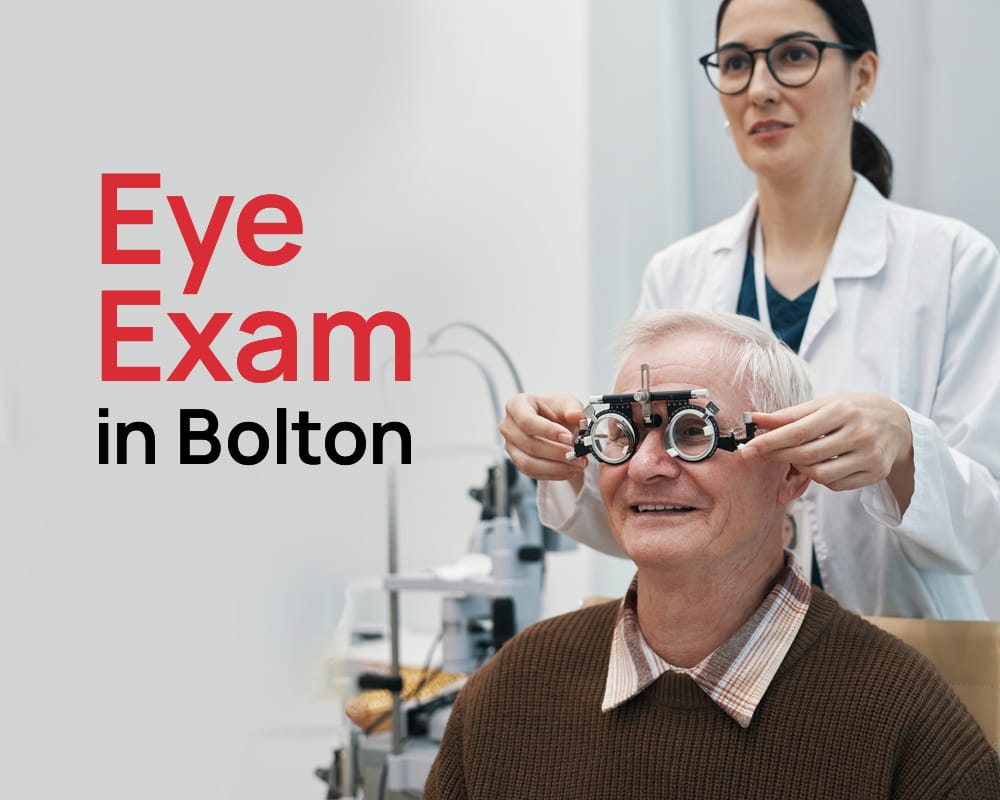
Most adults in Bolton only think about their eyes when something already feels wrong. By then, the problem has usually been building quietly for months – sometimes years. Getting an eye exam in Bolton early is one of the most straightforward steps you can take to protect your long-term vision. At Family Optical, we see this pattern every single week – and this post is here to help you break it.
The Hidden Cost of Waiting
It’s easy to push an eye appointment to the back of the list when life is full and your vision feels “mostly okay.”
Nothing dramatic is happening. You’re getting through your day without obvious problems. So the appointment gets delayed – by a month, then another, then another.
Here’s what most people don’t realize: your eyes rarely send loud, clear warnings when something is starting to go wrong. Conditions like glaucoma, early macular degeneration, and diabetic eye disease are almost completely silent in the early stages. There’s no pain. No sudden blurring. No obvious signal. By the time a symptom appears, the condition has often already progressed further than it needed to.
That’s the real cost of waiting. Not just discomfort – but missed opportunities to catch something early, when it’s easiest to manage.
Here’s the encouraging part: early detection genuinely changes outcomes. Most eye conditions are far more manageable – and in some cases, fully treatable – when they’re found before symptoms develop. That one appointment could protect decades of clear, comfortable vision.
How Vision Loss Sneaks Up on You
This is the part most people don’t expect: your vision can be declining, and you may not notice at all.
Your brain is extraordinarily adaptive. When one eye weakens, the other compensates automatically – without you asking it to, without you realizing it’s happening. Life carries on as usual. But the world is slowly becoming a slightly less clear version of what it once was. And because the change is so gradual, you’ve quietly accepted it as normal.
This happens more often than most people expect. Patients walk into an appointment and discover, only after testing, that their vision had shifted significantly since their last exam. They didn’t feel it slipping. They simply adapted without realizing it.
Common signs people miss:
- Headaches that appear in the afternoon or after screen time
- Eyes that feel tired and heavy by the end of the day
- Squinting slightly when reading text or looking at faces across a room
- Reading the same things now needs more light than it did before.
- Slight difficulty adjusting from bright rooms to darker spaces
- Noticing that night driving feels more tiring or less sharp than before
None of these feel alarming on their own. Each one is easy to write off as tiredness, stress, or simply getting older. But together, they often point to a vision change worth investigating – and one that can be corrected.
Signs That Deserve Your Attention
Some symptoms are quiet enough to dismiss. Others are harder to ignore – and yet people still delay.
Here are the signs that should move “someday” to “this week”:
Frequent squinting — If you squint at signs, screens, or faces across a room, your eyes are working overtime to compensate for a refractive error. It’s one of the most common early indicators.
Regular headaches with no obvious cause — Especially headaches that hit during or after reading, driving, or extended screen use. Vision strain is a widely overlooked trigger for recurring headaches.
Halos or glare around lights — If lights at night look blurry or have a ring around them, your eyes may be telling you something. This can be an early sign of astigmatism or cataracts starting to form.
Difficulty seeing clearly after dark — Night driving felt easy once – and somewhere along the way, it stopped being that simple.. Now you find yourself slowing down, leaning forward, or avoiding it altogether. That shift didn’t happen overnight – and it’s not something to ignore.
Persistent eye dryness or irritation — If your eyes burn, itch, or feel gritty most days, don’t blame it on allergies just yet. It could be dry eye disease or another condition – and the good news is that most of these respond well to the right treatment.
Reading challenges — Holding your phone farther away, moving menus closer, or needing large text settings are all signs your near or far vision may have shifted.
New or sudden floaters and flashes — Occasional floaters are often harmless. But if they multiply suddenly or you start seeing flashes, get your eyes checked right away.
Recognize two or more of these?Pick up the phone and make that call. You’re not overreacting – you’re paying attention to something that genuinely matters.
Why Regular Exams Matter More After 40
Your vision in your twenties and thirties tends to stay fairly stable. After 40, that changes – and it changes faster than most people expect.
Presbyopia – the gradual difficulty focusing on close objects – typically begins in the early to mid-forties. It’s why people start holding their phones at arm’s length or reaching for reading glasses at restaurants. It feels minor at first. But it’s a clear signal that your eyes are entering a new phase.
After 40, the risk of glaucoma, cataracts, and macular degeneration increases meaningfully with each passing year. These conditions are very manageable when caught early. When they’re missed, the impact on your daily quality of life can be far more significant and harder to reverse.
After 40, an eye exam is about much more than a new prescription. They’re about monitoring the internal health of your eyes year over year – so that any changes are found at the earliest, most treatable stage.
Why You Keep Delaying Your Eye Exam in Bolton
Most adults aren’t skipping eye exams out of carelessness. Life just fills in every available gap.
Work gets demanding. The kids have their own appointments. Weekends disappear before you even plan them. And since your eyes feel okay on most days, the exam keeps sliding down the list.
There’s also a common assumption worth naming: eye exams are for people with obvious problems. If you can still read your phone and drive without difficulty, everything must be fine.
That’s exactly why so many conditions go undetected for years.
An eye exam isn’t just a prescription check. Your eyes get checked from the inside out – every part, not just your vision.. A comprehensive exam can detect early signs of glaucoma, cataracts, macular degeneration, and even systemic conditions like diabetes and high blood pressure before other symptoms appear anywhere in your body.
How often should you go?
- Ages 20–39: Every two years, with no known risk factors
- Ages 40–64: Every one to two years – this is when changes become more common
- Ages 65 and above: Every year – risk increases significantly at this stage
If you have diabetes, high blood pressure, or a family history of glaucoma or macular degeneration, more frequent visits may be recommended regardless of age.
Your eyes can feel completely normal and still have something developing quietly inside them. Waiting for a symptom is not a safe strategy.
What Actually Happens at Your Appointment
Most people walk in not knowing what to expect. They come out wondering why they waited so long.
That’s how simple it really is.
Here’s what the appointment looks like, step by step:
- The optician asks about your eye history and your general health
- You read letters off a chart – close up and from a distance
- A quick test checks what prescription your eyes actually need right now
- A pressure check looks for early signs of glaucoma
- The optician looks carefully at the back of your eye – the retina and optic nerve
- They check for anything that needs watching, like cataracts or early macular changes
The whole visit takes around 45 minutes to an hour. You sit. You follow simple instructions. You leave knowing exactly where your eyes stand.
Most people say the same thing on the way out: that wasn’t bad at all.
A good eye clinic in Bolton does more than hand you a new prescription. They look at your eyes the way a doctor looks at your health – the full picture, not just one number. A skilled optometrist in Bolton checks what’s happening inside your eyes, not just how well you read a chart. That difference matters more than most people realize.
At Family Optical, David Joseph has spent over 35 years learning exactly what healthy eyes look like – and spotting when something is off. Susan Joseph at the Bolton location brings over 30 years of that same careful attention to every single patient. They don’t rush. They look closely. And they explain everything in plain language you can actually understand.
Take the First Step — Your Vision Deserves It
You wouldn’t wait until a toothache becomes unbearable before calling a dentist. Your eyes deserve that same level of attention.
The truth is, most people leave their eye appointment feeling genuinely relieved. Relieved they finally went. Relieved they know where they stand. And often surprised by how easy and reassuring the whole experience was.
Proactive eye care Bolton residents count on is not about reacting to problems after they arrive. It’s about staying ahead of them – knowing your eyes are healthy, or catching something early enough to act on it with confidence.
Family Optical has been serving Georgetown and Bolton families since 1990. With two convenient locations, highly experienced opticians, and a genuine commitment to every patient’s vision health, taking that first step has never been easier.
If you’ve been putting off your appointment, today is a good day to change that.
Bolton Location 12612 Highway 50, Unit 5, Bolton, ON L7E 1T6 905 857 5556 | Eye Exam Line: 905 857 7830 info@familyoptical.ca
Your eyes have been waiting long enough.