
One eye can see far less clearly than the other, and you might go years without noticing. That is the strange thing about amblyopia. If you want an Optical Shop in Bolton that can help you make sense of it, Family Optical is a good place to start. This guide is for parents and adults alike. It explains why amblyopia hides so well and how treatment works, because the right treatment depends on the cause.
What Is Lazy Eye (Amblyopia)?
Amblyopia is a vision development problem. It happens when one eye, or sometimes both, doesn’t develop normal vision. This usually begins in childhood, while the brain is still learning how to see. The affected eye can have reduced sharpness even though it looks completely healthy from the outside.
Most people call it “lazy eye.” That name is common, but it gives the wrong idea. The eye isn’t being lazy. The real issue is how the link between the eye and the brain developed.
Is Lazy Eye the Same as a Crossed or Wandering Eye?
Not quite, although the two get mixed up all the time. A crossed or wandering eye is called strabismus. It is an alignment problem, which means the eyes don’t point in the same direction. Amblyopia is different. It means the vision in one eye hasn’t developed as well as it should.
The two can show up together. Even so, they aren’t interchangeable, and you can have one without the other. Here is the part that surprises many parents. A child can have amblyopia even when their eyes look perfectly straight.
Why One Eye Can Be Blurry Without You Realizing It
When one eye consistently sends a poorer image
Imagine one eye has a much stronger prescription than the other. That eye sends a blurry picture to the brain all day long. The other eye sends a clear one. The brain naturally prefers the clearer picture, so it leans on that eye more and more.
Meanwhile, the weaker eye gets less useful practice. In childhood, that matters a great deal, and the blurry eye falls further behind.
Why the child may think their vision is normal
Try a quick thought experiment. You have always looked at the world with both eyes open. So you have probably never seen it through one eye alone.
Children are in exactly the same position. They have nothing to compare it to. Cover their stronger eye, and the world might suddenly look blurry. So when a child says everything looks fine, they are being honest. It just isn’t proof that both eyes see well.
Why this matters during an eye examination
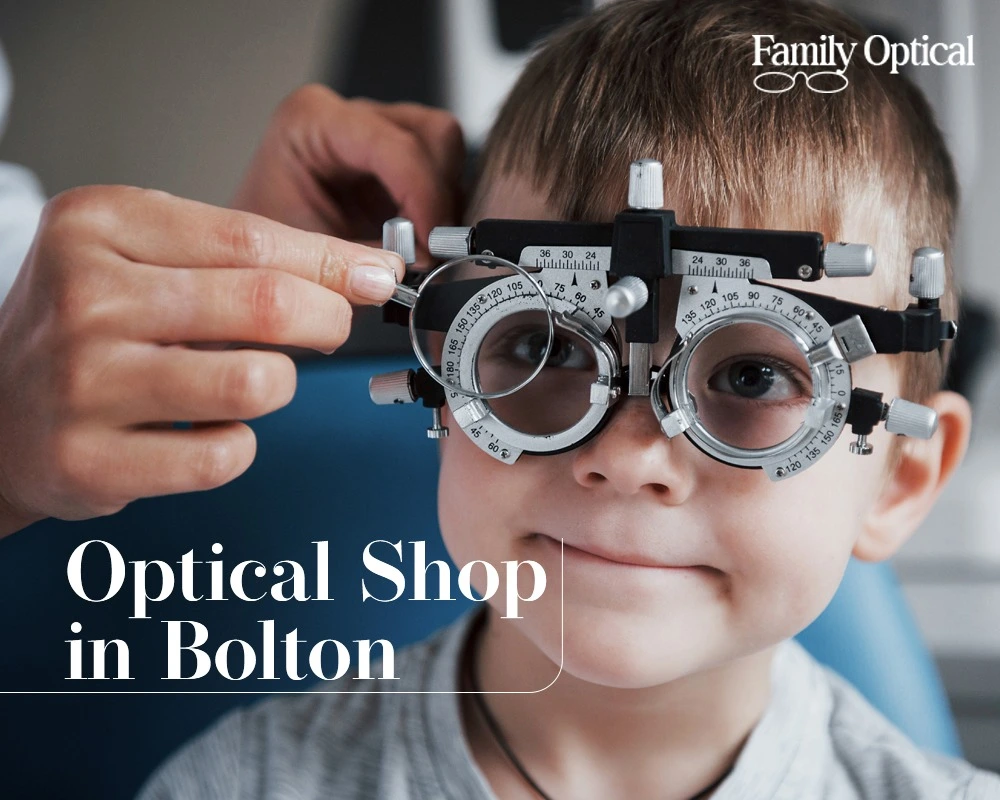
This is why an eye examination tests each eye on its own. With both eyes open, the stronger eye quietly covers for the weaker one. Testing them separately removes that cover, and the difference has nowhere to hide.
So “my child seems to see fine” isn’t enough to rule out amblyopia. Only a proper test can do that.
What Causes Amblyopia?
Amblyopia is what happens when normal visual development gets pushed off track. That can happen in three main ways.
Refractive / Anisometropic Amblyopia
This type appears when the prescription is very different between the two eyes. One eye might be much more farsighted, nearsighted or astigmatic than the other. The eyes still look completely normal,. So the problem can stay hidden for years.
The takeaway is simple. A child doesn’t need an obvious eye turn to have amblyopia.
Strabismic Amblyopia
In this type, the eyes don’t line up consistently. To avoid seeing double, the brain may start to ignore the picture from the misaligned eye, so that eye can’t develop normal vision.
The eye turn and the weak vision are related, but they are two different conditions.
Deprivation Amblyopia
This type is less common, but it can be serious. Something physically blocks vision early in life. A congenital cataract is one example. A significantly drooping eyelid, known as ptosis, can do the same thing.
It needs prompt medical care, and the blockage itself must be treated first.
What Signs of Amblyopia Should Parents Look For?
The clues change as your child grows. Younger children can’t tell you what they see, so watch how they behave.
Toddlers and Preschool Children
You might notice:
- An eye that turns in or out
- Squinting or closing one eye
- Tilting or turning the head to look at things
- Frustration with tasks that need careful, close looking
- Trouble judging distance or depth, such as missing a step or misjudging a toy
Now for the most important point. A child can have amblyopia and show none of these behaviors.
School-Age Children
By school age, you and your child’s teacher may see more. Your child might find reading or close work harder than expected. They may avoid detailed tasks or complain about tired or uncomfortable eyes. Activities that depend on both eyes working together, like catching a ball, can feel awkward. And an eye test may show that one eye is clearly weaker.
Be careful, though. Poor grades or a lack of sporting skill don’t prove anything. Many everyday things cause both.
Teenagers and Adults
Older people often find out by accident. You might cover one eye one day and realize the other sees very differently. You may notice an imbalance between your eyes that you can’t quite explain. Some people have weaker depth perception, or they have always felt that one eye lagged behind the other.
Adults raise a special question about treatment, and we will get to it shortly.
When Should You Book an Eye Examination?
For a Child
Book an assessment if any of these apply:
- An eye seems to turn
- One eye looks different from the other
- You worry that your child isn’t seeing as well as they should.
- Your child is known to have a big prescription difference
- Your child keeps covering or closing one eye.
- Something else about their vision is bothering you
Your child doesn’t have to show a problem first. If you are worried about your child’s visual development, arrange an eye exam near Bolton and let a professional take a proper look.
For an Adult
Start with one question. Has this eye always been weaker, or has it changed recently?
If it has been weaker for as long as you can remember, it may fit with childhood amblyopia. Other explanations are possible too.
If you only just noticed the difference, don’t assume it is old amblyopia. A recent or sudden change needs proper clinical assessment.
What Happens During an Amblyopia Eye Examination?
Here is a typical path. The exact tests can vary from person to person, so ask Family Optical which ones will apply to you.
- Initial checks. You begin with some preliminary tests and a chat about your history.
- Visual acuity. Each eye is tested separately, so a weaker eye can’t hide behind the stronger one.
- Refraction. This shows whether your prescription, or a gap between the two eyes, is lowering vision.
- Alignment and binocular vision. The optometrist looks at how your eyes line up and work together.
- Eye health check. This looks for any other reason vision might be reduced.
- Dilated or cycloplegic assessment, when needed. Children often focus hard without realizing it. Special drops relax that focusing, so their true prescription shows.
- Your plan. You leave with more than a label. You learn what caused the reduced vision and what should happen next.
How Is Amblyopia Treated?
There is no single treatment that everyone with amblyopia needs. The plan follows the cause.
Refractive / Anisometropic Amblyopia
The first step is to correct the prescription. Then your optometrist keeps track of how vision improves. Some children get better with glasses alone. Others need extra amblyopia treatment, depending on how they respond.
This is where accurate refraction really counts. So do well-made lenses, comfortable children’s frames, and regular follow-up visits for adjustments. Family Optical can help with each of those.
Strabismic Amblyopia
Here, the first goal is to strengthen the weaker eye. Patching or atropine drops may be used in suitable cases. The eye alignment may need management too, and surgery can be considered for some types of strabismus.
Vision therapy is not a standard treatment for every case. Family Optical does have a vision therapy clinic. But whether it has a role for you depends on what the examination finds.
Deprivation Amblyopia
First, the blockage has to be found and treated. That calls for prompt specialist care. Glasses and further vision rehabilitation may follow, depending on the underlying condition.
Can Amblyopia Be Treated in Adults?
Yes, adults still have options to explore. But it’s best not to hope for too much.
Amblyopia mostly begins in childhood. Long-standing amblyopia in an adult is different from a sudden loss of vision. Researchers are still studying ways to improve vision in adults. Some of that work looks at binocular and perceptual training, and at how the brain can adapt.
Results vary from person to person. Normal vision is not something anyone can guarantee.. And remember, a new drop in vision needs investigating. It shouldn’t be brushed off as old amblyopia.
Choosing an Eye-Care Provider for Amblyopia in Bolton
Maybe you are reading this because you or your child needs an assessment. So what should a Bolton appointment be able to cover? Here is what Family Optical offers.
Assessment and Prescription at an Optical Shop in Bolton
You should be able to get eye exams for both children and adults. Testing should cover visual acuity and refraction. It should also check for differences between the two eyes. Solid eye care Bolton families can rely on starts with this kind of careful assessment.
Binocular and Alignment Assessment
Ask whether the exam looks at how your eyes line up and work together. That check is key to understanding amblyopia.
Pediatric Vision Services
Family Optical runs a dedicated vision therapy clinic. It is used where clinically appropriate, and it is not a cure-all.
Eyewear and Follow-Up
Children need frames that fit well and lenses made accurately. Family Optical has an on-site finishing lab in Bolton. That makes adjustments and repairs easier.
Referral When the Problem Is Beyond Optical Care
An optical practice shouldn’t try to handle everything. If a structural or complex problem is suspected, you should be referred to the right specialist. Passing you on to someone else is not giving up. It is part of good care.
A Practical Next Step
If one eye seems weaker, don’t try to guess the cause. A proper exam can show whether it comes from your prescription, eye alignment, visual development or an eye health issue.
You can book with Family Optical for your child’s first eye exam or for new eye glasses in Bolton. Call or visit the Bolton store:
info@familyoptical.ca, 905 857 5556 12612 Highway 50, Unit 5, Bolton, ON L7E 1T6