
When it comes to your child’s health, vision care is often overlooked until a problem becomes obvious. However, regular eye exams are crucial for your child’s development, learning, and overall well-being. This comprehensive kids eye exam age guide in Georgetown will help you understand when your child needs their first eye exam, what to expect at different ages, and how to find the best pediatric eye care in your community. If you’re a Georgetown parent searching for reliable information about children’s vision care, this kids eye exam age guide in Georgetown provides everything you need to protect your child’s eyesight.
Why Early Eye Exams Matter for Children
Vision plays a fundamental role in how children learn and interact with the world. According to the American Academy of Ophthalmology, approximately 80% of learning in the classroom is visual. When children struggle with undetected vision problems, they may fall behind academically, experience difficulty with sports and physical activities, or develop behavioral issues that stem from visual frustration.
Early detection of eye conditions can prevent long-term problems. Many serious eye conditions, including amblyopia (lazy eye), strabismus (crossed eyes), and refractive errors, are most effectively treated when caught early in childhood. This makes following a proper kids eye exam age guide in Georgetown essential for every parent.
The Complete Kids Eye Exam Age Guide in Georgetown: When Should Your Child Have Eye Exams?
Following the proper kids eye exam age guide in Georgetown ensures your child receives timely vision care at every developmental stage. Georgetown optometrists recommend specific ages for comprehensive eye examinations to monitor your child’s visual development and detect potential problems early.
First Eye Exam: 6 Months Old
The Canadian Association of Optometrists recommends that babies have their first comprehensive eye exam at six months of age. This might surprise many parents, but infant eye exams are painless, non-invasive, and incredibly important. Following this kids eye exam age guide in Georgetown ensures your baby’s visual development is on track from the very beginning.
During this first exam, your Georgetown optometrist will check for:
- Proper eye development and health
- Focusing ability
- Eye alignment and movement
- Signs of congenital eye conditions
- Refractive errors
The examination uses specialized techniques designed for pre-verbal children. Your optometrist can assess your baby’s vision without requiring verbal responses, using methods like observing how eyes track objects and respond to visual stimuli. This first appointment in your kids eye exam age guide in Georgetown sets the foundation for lifelong eye health.
Second Eye Exam: Age 3
The next critical milestone in our kids eye exam age guide in Georgetown comes when your child turns three. By this age, children can typically participate more actively in the examination process, though many tests still don’t require verbal responses. Georgetown parents should mark this age as an important checkpoint in their child’s vision care journey.
At age three, optometrists evaluate:
- Visual acuity (how clearly your child sees)
- Eye coordination and alignment
- Depth perception
- Color vision
- Signs of common childhood eye conditions
This examination helps identify issues that may affect your child’s readiness for preschool or kindergarten. Catching vision problems before formal education begins gives children the best chance for academic success.
Before Starting School: Age 5
Before your child enters kindergarten or first grade, they should have another comprehensive eye exam. This is perhaps the most crucial checkpoint in the kids eye exam age guide in Georgetown, as it ensures your child can see clearly for classroom learning. Many Georgetown schools recommend or require vision screening, but a comprehensive eye exam provides much more detailed information about your child’s visual capabilities.
The pre-school eye exam includes:
- Detailed visual acuity testing
- Binocular vision assessment
- Eye health evaluation
- Screening for conditions that affect learning
- Evaluation of focusing and tracking abilities
Many vision problems first become apparent when children start school. Teachers may notice that a child squints at the board, holds books too close, or has difficulty with reading. A comprehensive eye exam before school starts can prevent these issues from affecting your child’s early educational experience. Making this appointment part of your kids eye exam age guide in Georgetown routine helps ensure school readiness.
School-Age Children: Every Year
Once your child enters school, annual eye exams become essential. Children’s eyes change rapidly as they grow, and new vision problems can develop at any time. The kids eye exam age guide in Georgetown recommends yearly examinations throughout the school years for several important reasons. At Family Optical, we see many Georgetown families who schedule their children’s eye exams at the beginning of each school year to ensure optimal vision for learning.
Changing Vision Needs: As children grow, their eyes change too. Prescriptions that worked last year may no longer be adequate, and new conditions can emerge. Following your kids eye exam age guide in Georgetown with annual visits helps track these changes.
Increasing Visual Demands: Each grade level brings more challenging visual tasks, from reading smaller print to using computers and digital devices more frequently.
Early Detection: Conditions like myopia (nearsightedness) often develop or progress during school years. Regular monitoring allows for early intervention. The kids eye exam age guide in Georgetown emphasizes annual exams specifically because vision changes can happen quickly during childhood growth spurts.
Sports and Activities: As children participate in sports and extracurricular activities, their vision needs may change, requiring protective eyewear or sports-specific correction.
What Happens During a Pediatric Eye Exam in Georgetown?
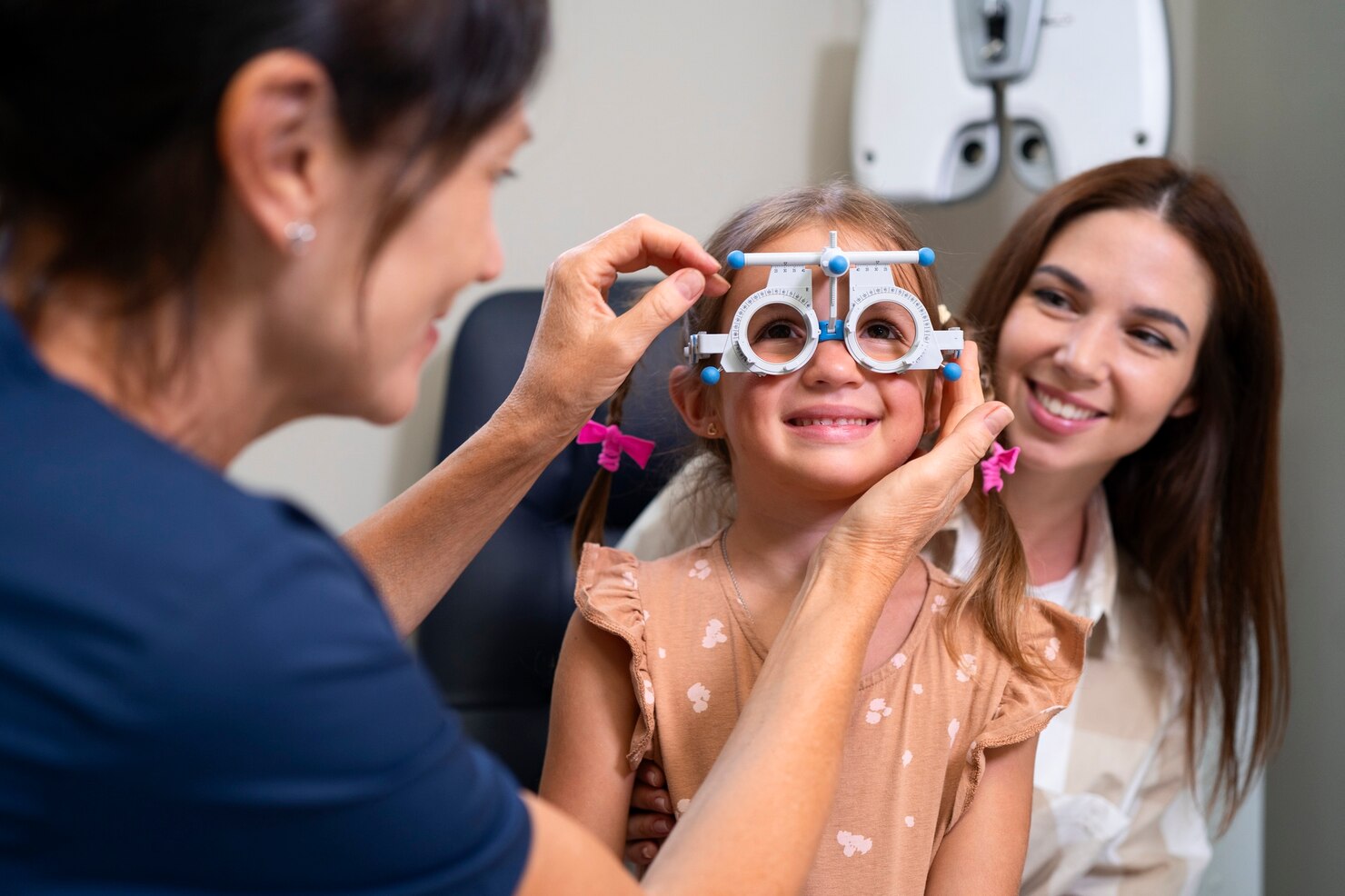
Understanding what happens during an eye exam can help ease your child’s anxiety and prepare you both for the experience. Pediatric eye exams at Family Optical Georgetown and other Georgetown practices are designed to be child-friendly and comfortable. This section of our kids eye exam age guide in Georgetown walks you through the typical examination process.
Preliminary Testing
The exam typically begins with preliminary tests that assess basic visual function. For young children, these tests are often presented as games or activities. The optometrist may use pictures, symbols, or interactive tasks to evaluate vision without requiring children to read letters.
Visual Acuity Testing
Visual acuity measures how clearly your child sees at various distances. Younger children might identify pictures or shapes, while older children can read standard eye charts. Each eye is tested separately to identify any differences in vision between the two eyes.
Eye Health Examination
Using specialized instruments, your Georgetown optometrist examines the internal and external structures of your child’s eyes. This includes checking:
- The cornea and lens
- The retina and optic nerve
- Eye muscles and movement
- Overall eye health
Most of these tests are quick, painless, and non-invasive. Eye drops may be used to dilate pupils, allowing for a more thorough examination of the internal eye structures. Georgetown optometrists who follow best practices for the kids eye exam age guide in Georgetown ensure these examinations are comfortable for children of all ages.
Binocular Vision Testing
These tests evaluate how well your child’s eyes work together as a team. Poor eye coordination can lead to problems with depth perception, reading, and hand-eye coordination. The optometrist assesses eye alignment, focusing ability, and tracking skills.
Additional Testing When Needed
Depending on your child’s symptoms, medical history, or preliminary findings, additional specialized testing may be recommended. This could include color vision testing, visual field assessment, or evaluation for learning-related vision problems. Georgetown optometrists who follow the kids eye exam age guide in Georgetown protocols ensure comprehensive evaluations tailored to each child’s age and needs.
Signs Your Child Might Need an Eye Exam Before Their Scheduled Time
While following the kids eye exam age guide in Georgetown provides a strong foundation for eye health, certain warning signs indicate your child may need an earlier or additional examination. The Prevent Blindness organization provides comprehensive information about childhood vision problems that parents should watch for.
Behavioral Signs
- Sitting too close to the television
- Holding books or devices very close to the face
- Frequent eye rubbing
- Excessive blinking or squinting
- Tilting head to see better
- Covering one eye
- Avoiding reading or other close-up activities
Physical Signs
- Red, itchy, or watery eyes
- Sensitivity to light
- Eye turning in or out
- White pupil in flash photographs
- Drooping eyelid
- Eyes that don’t align or move together
Performance Signs
- Difficulty reading or doing homework
- Poor hand-eye coordination
- Losing place while reading
- Using a finger to track while reading
- Complaints of headaches or eye strain
- Declining school performance
If you notice any of these signs, don’t wait for the next scheduled exam. Contact your Georgetown eye care provider promptly to schedule an evaluation.
Common Childhood Eye Conditions Detected During Exams
Regular eye exams following the kids eye exam age guide in Georgetown help detect various conditions that affect children. According to the National Eye Institute, early detection and treatment of these conditions significantly improves outcomes for children.
Refractive Errors
Myopia (Nearsightedness): Difficulty seeing distant objects clearly. This condition often develops during school years and may progress as children grow. Regular exams according to the kids eye exam age guide in Georgetown allow for early myopia detection and management.
Hyperopia (Farsightedness): Difficulty seeing close objects clearly. While many young children have some degree of farsightedness, significant amounts can cause eye strain and focusing problems.
Astigmatism: Blurred vision at all distances caused by an irregularly shaped cornea. This can occur alone or in combination with myopia or hyperopia.
Amblyopia (Lazy Eye)
Amblyopia develops when one eye has significantly better vision than the other, causing the brain to favor the stronger eye. Early detection and treatment are crucial, as amblyopia is most treatable in young children.
Strabismus (Crossed Eyes)
This condition involves misalignment of the eyes. One eye may turn in, out, up, or down while the other focuses correctly. Strabismus can lead to amblyopia if not treated promptly.
Convergence Insufficiency
This occurs when the eyes have difficulty working together when focusing on nearby objects, causing problems with reading and close work. Many children with this condition are misdiagnosed with learning disabilities.
Color Vision Deficiency
Commonly called color blindness, this condition affects how children perceive certain colors. While it cannot be corrected, early detection helps teachers and parents provide appropriate accommodations.
Preparing Your Child for Their Eye Exam
Making eye exams a positive experience helps ensure your child cooperates and feels comfortable with vision care. Here are strategies to prepare children at different ages:
For Infants and Toddlers
- Schedule the appointment when your child is typically well-rested and fed
- Bring favorite toys or comfort items
- Stay calm and positive yourself, as children sense parental anxiety
- Allow extra time so you don’t feel rushed
For Preschoolers
- Read children’s books about visiting the eye doctor
- Play “eye doctor” at home using a flashlight and stuffed animals
- Explain that the doctor will play games with their eyes
- Emphasize that the exam doesn’t hurt
- Consider scheduling a preliminary visit to familiarize your child with the office
These preparation strategies make following the kids eye exam age guide in Georgetown much easier, as children who know what to expect are typically more cooperative during examinations.
For School-Age Children
- Explain what will happen during the exam
- Answer questions honestly and reassuringly
- Discuss how glasses (if needed) can help them see better and perform better in school and sports
- Let them know that many of their friends probably also wear glasses
- Allow them to ask the optometrist questions directly
Older children appreciate understanding the importance of the kids eye exam age guide in Georgetown and how regular vision care supports their academic and athletic performance.
Insurance Coverage and Costs in Georgetown
Understanding coverage for children’s eye exams can help you plan for your family’s vision care needs. In Ontario, OHIP (Ontario Health Insurance Plan) provides partial coverage for eye exams for children. This makes following our kids eye exam age guide in Georgetown more accessible for all families:
- Children under 20 years of age are eligible for one insured eye exam every 12 months
- Additional exams may be covered if medically necessary
- OHIP coverage helps make regular eye care accessible for Georgetown families
Many families also have private insurance through workplace benefits that may provide additional coverage for:
- More frequent eye exams
- Eyeglasses and contact lenses
- Specialized testing
- Treatment services
Finding the Right Pediatric Eye Care Provider in Georgetown
Choosing an optometrist who specializes in or has significant experience with pediatric eye care ensures your child receives the best possible care. When selecting an eye care provider to follow your kids eye exam age guide in Georgetown, consider:
Experience with Children
Look for practices that see many pediatric patients and have optometrists trained in pediatric vision care. Experienced providers know how to make children comfortable and can effectively examine even very young or uncooperative children.
Child-Friendly Environment
The office should feel welcoming to children, with:
- A comfortable waiting area with toys or activities
- Friendly, patient staff
- Equipment designed for children
- A positive, non-threatening atmosphere
Comprehensive Services
Choose a provider offering complete pediatric eye care, including:
- Thorough examinations for all ages
- Treatment for common childhood eye conditions
- Wide selection of children’s eyewear
- Emergency eye care services
- Coordination with pediatricians and schools when needed
Location and Convenience
A conveniently located practice in Georgetown makes it easier to maintain regular appointments and handle any urgent vision needs that arise.
The Role of Technology in Children’s Eye Health
Modern children face unique vision challenges due to increased screen time. Digital devices have become integral to education and entertainment, but they also create new concerns for developing eyes.
Georgetown parents using this kids eye exam age guide in Georgetown should also be aware of digital eye health considerations.
Digital Eye Strain
Extended screen time can cause:
- Eye fatigue and discomfort
- Headaches
- Dry eyes
- Blurred vision
- Difficulty focusing
Blue Light Exposure
While research continues on the long-term effects of blue light from screens, some eye care professionals recommend blue light filtering lenses for children who spend significant time on digital devices.
Myopia Progression
Studies suggest that increased near work (including screen time) and reduced outdoor time may contribute to the rising rates of myopia in children. Your Georgetown optometrist can discuss myopia management strategies if your child is at risk.
Healthy Screen Habits
Follow the 20-20-20 rule: Every 20 minutes, take a 20-second break and look at something 20 feet away. Encourage outdoor play and limit recreational screen time according to pediatric guidelines.
Conclusion: Protecting Your Child’s Vision Starts Today
Following this kids eye exam age guide in Georgetown gives your child the best chance for healthy vision and successful development. Don’t wait for obvious problems to appear—many serious eye conditions have no noticeable symptoms in their early stages. Regular comprehensive eye exams, starting at six months and continuing annually once your child enters school, protect their vision and support their growth.
Schedule your child’s eye exam today at Family Optical in Georgetown. Our caring team is here to answer your questions, address your concerns, and provide the exceptional pediatric eye care your family deserves. Give your child the gift of clear, healthy vision that will serve them throughout their life.
For more information or to book an appointment, visit familyoptical.ca or contact our Georgetown office directly. We look forward to partnering with you in protecting your child’s precious vision using this comprehensive kids eye exam age guide in Georgetown.