
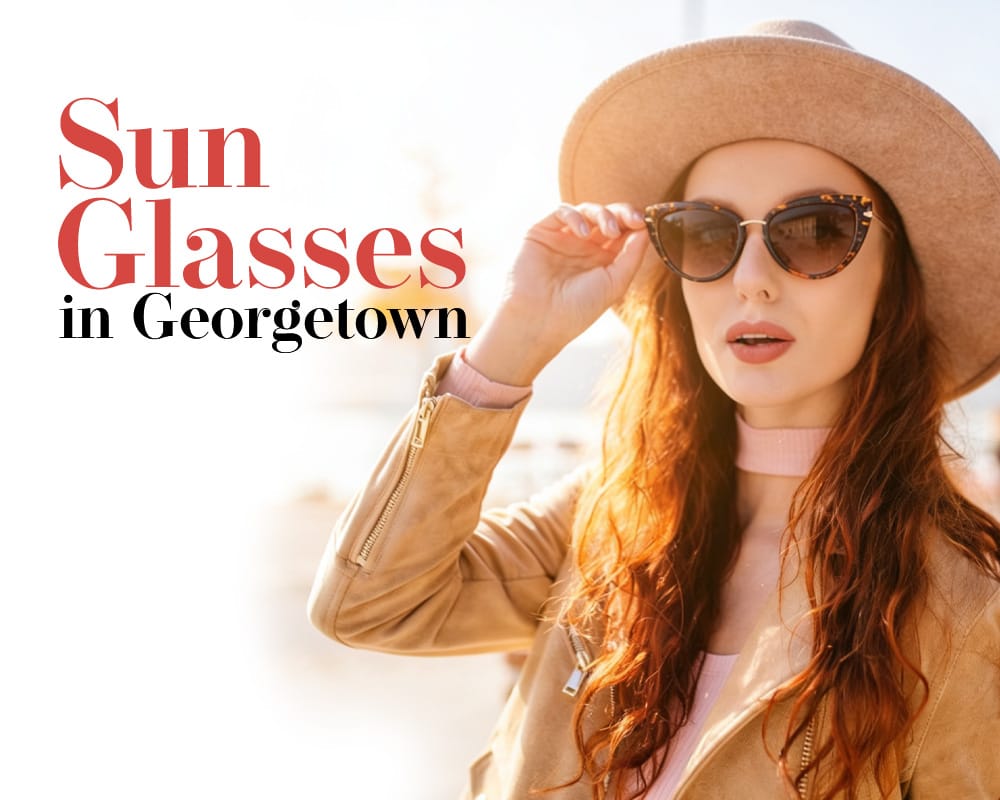
Summer in Ontario feels short, so most people rush outside the second the sun comes out. You squint through bright afternoons without thinking twice about your eyes. That habit quietly puts real strain on your vision every single season. Family Optical sees this every year, and if you have ever searched for sunglasses in Georgetown, this is exactly why it matters right now.
Why Canadian Summers Are Harder on Your Eyes Than You Think
You probably assume strong sun only happens in tropical countries. Canada actually gets surprisingly high UV levels during June and July. Long daylight hours mean your eyes are exposed for more hours each day. Add in reflection from lakes, pavement, and car windshields, and the exposure adds up fast.
Most people only think about sunscreen for their skin. Your eyes absorb UV radiation just like your skin does. The difference is you cannot see the damage happening in the moment. It builds up slowly, year after year, without any warning signs.
This is why so many people in Georgetown and Bolton end up dealing with eye strain they cannot explain. They blame screens or tiredness. The real cause is often unprotected sun exposure from daily outdoor activity.
Think about how your summer actually looks. You walk the dog in the morning. You drive with the sun low on the windshield. You sit on a patio for lunch. Each moment adds a little more exposure, and none of it feels dramatic enough to worry about at the time.
That is exactly the problem. UV damage does not announce itself with pain or redness right away. It works quietly in the background. You only notice the impact years later, when your eyes feel tired more often or your vision starts to change in ways you cannot fully explain.
What UV Exposure Actually Does to Your Eyes
It is frustrating to learn this only after years of squinting through summer. UV rays affect the cornea, the lens, and even the retina over time. This is not a minor inconvenience. Repeated exposure is linked to cataracts, growths on the eye, and long term vision decline.
Photokeratitis is another real risk. Think of it as sunburn, but on your eye surface. It happens after intense exposure, especially around water or snow, and causes pain, redness, and blurred vision for a day or two. Anyone who has spent a long unprotected day at the lake has probably felt a milder version of this without realizing what caused it.
Here is the part most people miss. Cloudy days do not block UV rays the way you would expect. Light clouds let UV pass through almost unaffected. You can get just as much exposure on an overcast afternoon as you would on a clear one.
There is also a difference between UVA and UVB rays, and it actually matters for your decision. UVB rays are linked more closely to surface damage and burning. UVA rays penetrate deeper and are tied more closely to long term changes inside the eye. A lens that blocks both is doing real work, not just looking dark.
Age also changes the risk level. Younger eyes have clearer lenses, which let more UV reach the retina. As people get older, the natural lens yellows slightly and filters some UV on its own. This does not mean older adults are safe. It means decades of earlier exposure have already added up, which is why cataract risk increases steadily with age rather than appearing suddenly.
Sunglasses in Georgetown: Common Buying Mistakes
A lot of people think any dark lens does the job. That assumption causes more harm than you would expect. Darkness only blocks visible light, not UV radiation. A pair of cheap sunglasses can actually make things worse by causing your pupils to dilate while still letting UV rays through, which means more radiation reaches the inside of your eye than if you wore no sunglasses at all.
What you actually need is UV400 protection. This means the lens blocks both UVA and UVB rays almost completely. Family Optical checks this on every pair before it leaves the store, so you are not guessing based on the price tag alone.
Polarization is another detail people overlook. It does not block UV on its own, but it cuts glare from water, roads, and windshields. That glare reduction is what actually makes driving and outdoor activity comfortable, especially during early morning or early evening drives when the sun sits low.
Lens colour matters more than most people realize too. Grey lenses keep colours true to life and work well for general daily wear. Brown or amber lenses boost contrast, which helps on hazy days or when you are active outdoors. Green lenses sit somewhere in between, balancing contrast with natural colour.
Common mistakes worth avoiding:
- Buying based on tint darkness instead of UV rating
- Assuming all sunglasses are the same regardless of price
- Skipping a proper fitting if you wear prescription lenses
- Wearing sunglasses only occasionally instead of daily during summer
- Choosing frame style over actual lens coverage around the eyes
That last point matters more than people expect. Small frames or trendy thin styles can leave gaps where sunlight sneaks in from the sides. Wraparound or larger lens shapes give better real world coverage, even if they are not always the first style you reach for.
Who Needs Extra Eye Protection During Summer
Some people face higher risk than others, and it helps to know where you stand. Children spend more time outdoors and have clearer lenses, so more UV reaches their retina. Outdoor workers face hours of continuous exposure without much choice in timing, since their schedule is dictated by the job, not the sun.
Contact lens wearers also need to think about this differently. Your contacts do not protect against UV unless they are specifically designed to. Many people assume contacts replace the need for sunglasses entirely, which is simply not true.
Older adults face a different concern, since cumulative exposure over decades raises cataract risk significantly. If a parent or grandparent has already had cataract surgery, that is often a sign of decades of accumulated sun exposure rather than something that appeared overnight.
People with light coloured eyes also tend to be more sensitive to bright light and glare. Lower melanin levels in the iris mean less natural filtering, so squinting and discomfort show up faster during peak summer hours.
If you fall into any of these groups, sunglasses are not optional during summer. They are part of basic eye care, the same way sunscreen is part of basic skin care.
Getting Properly Fitted Instead of Guessing
Grabbing sunglasses off a shelf seems quick, but you miss a key step. A proper fitting checks frame size, lens curve, and whether you need a prescription built in. Without this, glare can still slip in around the edges of the frame, even if the lens itself is high quality.
Family Optical has been the trusted optical shop Georgetown families have relied on for decades, long before sunglasses shopping ever crossed their minds.
This is where working with an actual optician makes a difference. Family Optical has spent decades fitting lenses for people across Georgetown and Bolton, which means the advice you get is based on real experience, not guesswork from a retail display.
If you already wear prescription glasses, you have two solid options. You can get prescription sunglasses made specifically for your vision, with the UV protection built directly into the lens. Or you can add a clip on or transition lens that adjusts automatically as light changes throughout the day.
If you also need eye glasses in Georgetown for everyday wear, the same fitting visit can cover both your regular pair and your sunglasses.”
Either way, the goal stays the same. You want clear vision and full UV protection at the same time, without compromising on either one just to save a step.
A proper fitting also catches small details people miss on their own. Pupil distance affects how well a lens centres in front of your eye. Frame width affects coverage on the sides. None of this shows up clearly until someone actually measures it.
A quick fitting today can save you years of unnecessary eye strain. Visit your nearest store and let an experienced optician check what your eyes actually need this summer, instead of relying on a guess made under store lighting.
Conclusion
Canadian summers are shorter than most, and that makes people careless about sun protection for their eyes. The UV exposure is real, even on cloudy days, and the damage builds up quietly over time without any obvious warning. Choosing the right lens matters far more than choosing the darkest tint on the shelf.
If you are looking for proper spectacles in Georgetown, getting professionally fitted is the smarter long term choice. Family Optical has helped families across both locations protect their vision for decades through hands on expertise and genuine care. Book a fitting before peak summer hits, and give your eyes the protection they actually need this season.