
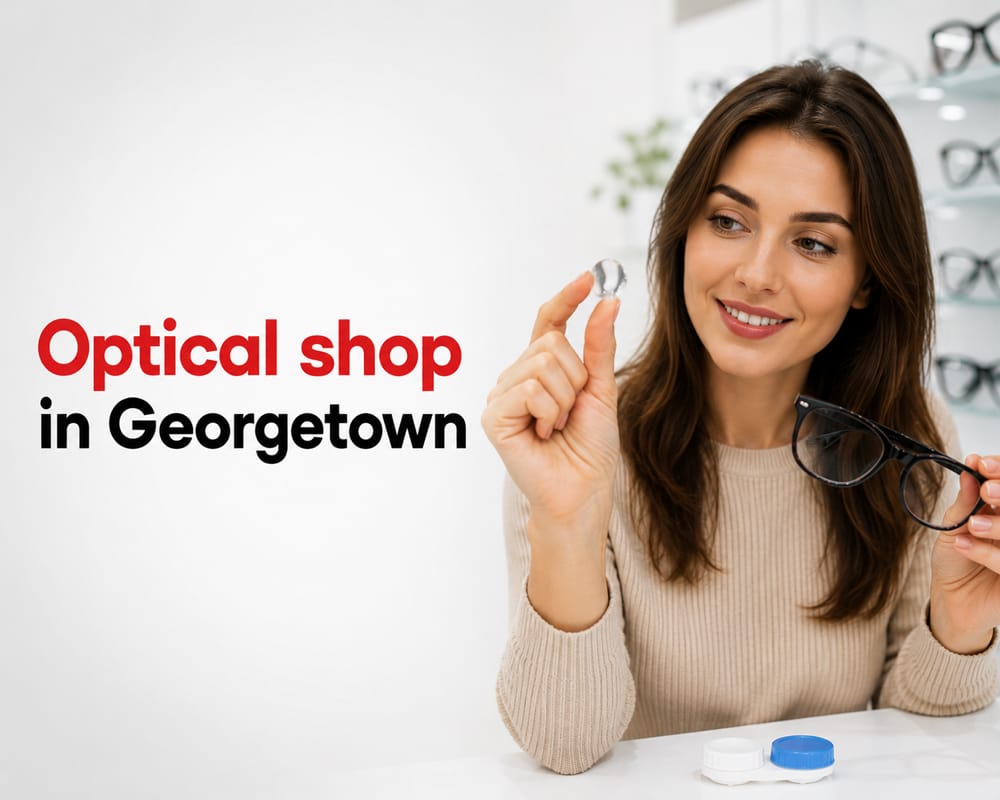
Standing in front of the mirror, wondering if you should switch from glasses to contacts? You’re not the only one. Every week, people walk into our optical shop in Georgetown asking the exact same question. Should I stick with glasses? Should I finally try contact lenses? At Family Optical, we hear this all the time. And here’s the truth: there’s no single right answer. It depends on you. Your eyes. Your job. Your daily routine. This guide breaks it all down, so you can choose with confidence, not guesswork.
Struggling to Decide? You’re Not Alone
It’s frustrating standing there, unsure which option fits you. Glasses feel familiar. Contacts promise freedom. Maybe your eye doctor mentioned contacts at your last checkup. Maybe your glasses keep sliding down your nose or fogging up on cold days.
No matter what brought you here, you want one thing: to spend your money on the right choice, not the wrong one. Let’s figure this out together, step by step.
Which Is More Comfortable: Contacts or Glasses?
This is usually the first worry. Will contacts irritate your eyes? Will glasses feel heavy after a long day?
Here’s the honest answer. Both can be comfortable. It depends on your eyes and how well they’re fitted.
Glasses rest on your nose and ears. Some people barely notice this. Others feel the weight by evening. Contacts sit directly on your eye. When fitted correctly, most people forget they’re even wearing them.
What affects comfort the most:
- How well your prescription is measured
- The quality of your frames or lens material
- Whether you have dry eyes
- How many hours you wear them daily
If you work long hours at a desk, this matters even more. A properly fitted pair, whether glasses or lenses, should never feel like a burden by 5 PM. If yours does, it’s time for a check-up, not a new habit of pushing through discomfort.
Here’s something worth knowing. A lot of people blame their discomfort on “glasses just being glasses.” But sore spots on your nose or ears usually mean one thing: your frames don’t fit right. A quick adjustment at our Georgetown store can fix this in minutes. Once your frames actually fit, you stop noticing them by lunchtime. So before you decide contacts are the answer, get your current glasses checked. Sometimes the fix isn’t switching. It’s fitting.
Which Fits Your Daily Routine Better?
This is really the biggest question. Your lifestyle should drive your decision, not just personal preference.
For Office Workers and Screen Users
You’re staring at screens for hours. Contact lenses give you a wider field of vision with no frame in the way. But glasses can be more comfortable during long screen sessions, especially with a blue-light coating. Many office workers actually keep both and switch depending on the day.
For Students
Between classes, sports, and study sessions, students need something that keeps up. Contacts stay out of the way during group work and presentations. Glasses are simpler in the morning rush, no touching your eyes, no fuss.
For Drivers
Peripheral vision matters when you’re behind the wheel. Contacts don’t create blind spots at the frame edges. Glasses can fog up when you switch from a cold car to warm air, right when you need clear vision the most.
For Gym-Goers and Athletes
If you’ve ever had glasses slip mid-workout, you already know the answer. Contact lenses stay in place during movement, sweat, and sports. This is one of the clearest lifestyle wins for contacts.
For Frequent Travellers
Daily disposable contact lenses are convenient. No cleaning solution to pack, no case to lose. But glasses remain the reliable backup when you’re tired after a long flight and don’t want to deal with your eyes at all.
For People Working Outdoors
Wind, dust, and bright sun change the equation. Contacts paired with sunglasses give you full protection and clear vision. Glasses alone can smudge or get dusty fast in outdoor conditions.
Why Visit an Optical Shop in Georgetown for the Right Fit?
You don’t have to guess your way through this. A proper eye exam tells you what your eyes actually need, not what looks good on paper. At Family Optical, our team looks at your prescription, your daily habits, and your comfort before recommending anything.
Some people are great candidates for both. Others have eyes that suit one option better. You won’t know for sure until someone checks. Book an exam and get a real answer, not an online guess.
Which Gives You Clearer Vision?
Contact lenses often give sharper, more natural vision. There’s no frame edge, no glare bouncing off the lens, and no distortion at the corners of your eye.
Glasses can distort your peripheral vision slightly, especially with stronger prescriptions. You may notice this most when looking sideways without turning your head.
That said, glasses have improved a lot. Anti-glare coatings and high-index lenses reduce most of these issues. For most daily tasks, both options work well once properly fitted.
Night driving is where the difference shows up most. Streetlights and headlights can create halos or starburst patterns through glasses lenses, especially older ones. Contacts sit closer to your natural eye curve, so this effect is usually much smaller. If night glare bothers you, this alone might tip your decision toward contacts, or at least toward asking about anti-reflective coating on your next pair of glasses.
Which Is Easier to Maintain?
This one comes down to your habits. Be honest with yourself here.
Glasses need:
- Wipe the lenses now and then
- Keep them safe so they don’t scratch
- Get new lenses each year or two, or when your prescription changes
For contact lenses:
- Clean and soak them daily, unless they’re dailies
- Swap them out on time, no exceptions
- Needs more care overall
If you’re exploring contact lenses in Georgetown for the first time, daily disposables remove most of the maintenance headache. You wear them once, then toss them. No solution, no case, no scrubbing at night.
If you tend to lose things or forget routines, glasses are simply lower maintenance. There’s nothing to touch, clean, or replace daily.
Ask yourself one honest question. Do you remember to take your makeup off every single night? If the answer is sometimes, that same habit gap will show up with contact lens care too. It’s worth knowing this about yourself before you commit.
Which Costs Less Over Time?
You’re not really asking what the price tag says today. You’re asking which one costs less over the next few years.
Glasses are usually a bigger upfront cost, but they last longer. One good pair can serve you for a year or two.
Contact lenses are cheaper per unit, but they’re a recurring cost. Daily, weekly, or monthly, you’re always buying more. Over a year, this can add up close to what a quality pair of glasses would cost.
The real answer: neither is clearly cheaper. It depends on how often you replace glasses and which type of lenses you choose.
Which Is Healthier for Your Eyes?
This part makes people uneasy, and that’s fair. Could contacts hurt your eyes? Is it safe to wear them daily?
Contacts are safe when you follow the rules. Replace them on schedule. Never sleep in daily lenses. Wash your hands before touching them. Skip any of this, and you raise your risk of infection.
Glasses carry almost no health risk. There’s nothing touching your eye directly.
If you already deal with dry eyes, many patients who choose eye glasses in Georgetown find them the more comfortable, lower-risk option. Your eye doctor can tell you exactly which lenses, if any, are safe for your eye condition.
Will You Look Better Without Glasses?
Let’s be honest, this question isn’t really about vision. It’s emotional.
Some people feel more like themselves without frames on their face. Others love how their glasses look and wouldn’t trade them for anything.
There’s no wrong feeling here. If your glasses make you confident, keep wearing them. If you’re curious how you’d look without them, contacts let you try that without anything permanent. This decision is allowed to be about how you feel, not just function.
Which Works Best for Specific Situations?
Sometimes the answer isn’t either-or. It’s about the moment.
- Driving: Contacts avoid frame blind spots, especially at night
- Sports: Contacts stay secure during movement
- Weddings and events: A lot of people wear contacts just for photos, then switch back
- Office work: Glasses with blue-light coating reduce screen strain
- Using computers all day: Either works, but glasses need the right coating
- Travelling: Glasses are the low-effort backup option
- Rainy weather: Glasses fog and collect droplets; contacts stay clear
At Family Optical, we often suggest keeping a pair of glasses as backup, even for people who love their contacts. It’s a small habit that saves a lot of stress on a bad day.
Think about it this way. If your contact lens tears right before an early meeting, or your eyes feel dry after a long flight, you don’t want to be stuck. A backup pair of glasses means you’re never without clear vision, no matter what the day throws at you.
Can You Use Both Depending on the Situation?
Yes, and honestly, this is what most people end up doing. Nobody says you’re locked into one choice for life.
Wear contacts for the gym, driving, or a big event. Switch to glasses at home in the evening or when your eyes need a rest. That’s the real win here glasses keep you comfortable, contacts keep you free, and you don’t have to choose.
Making Your Final Decision
Glasses or contacts which one wins? Honestly, there’s no single winner here. It comes down to your eyes, your daily routine, and how you want to feel each day.
Neither option is universally better. What matters is getting proper guidance from an optometrist Georgetown who actually looks at your eyes before recommending anything. Guessing on your own is how people end up with the wrong fit and wasted money.
At Family Optical, we’re happy to walk you through both options, answer your questions honestly, and help you find what actually works for your lifestyle. Visit us at 280 Guelph Street, Unit 18, Georgetown, ON L7G 4B1, call us at 905 873 3050, or book your eye exam directly through our Eye Examination Direct Line at 905 873 0367. You can also reach us anytime at info@familyoptical.ca.
Your vision, your choice. We’re just here to help you make it with confidence.